
The hidden cost of disconnected hotel technology
Every department chose a good system. The guest experiences the result, and the cost of the gaps between them never appears on anyone’s budget.

Technology decisions in hospitality are usually made in departmental isolation, and usually made well. Operations picks a PMS that fits how the property runs. Revenue picks tools that answer revenue’s questions. Marketing picks a CRM and a booking engine. Each choice is defensible on its own terms.
The guest does not experience any of those terms. They experience the result.
The costs nobody bills for
Disconnection is expensive in ways that never land on a budget line, which is precisely why it persists.
- Manual reconciliation. Someone spends a day a month moving numbers between systems so a report can exist. That is a salary cost being spent on data plumbing.
- Decisions made late. If connecting two systems takes a fortnight, questions that would need that connection simply stop being asked.
- Guest data left on the table. A returning guest treated as a stranger is a marketing cost being paid twice for a relationship you already had.
- Constrained marketing. When a campaign idea needs a change the stack cannot make cheaply, the idea quietly dies. Nobody logs that.
- Compounding integration debt. Each new system is integrated against the current mess, so the cost of the next one goes up.
Add those together across a year and the number is usually much larger than the licence fee anyone is arguing about.
Why it happens to good operators
Because the alternative looks like overreach. Asking marketing, operations, revenue and IT to agree a shared model of the guest journey before anyone buys anything is a big ask in a business that has rooms to sell this week.
So the stack accretes. And each individual decision was rational.
The guest journey as the decision framework
The fix is not a bigger platform. It is deciding the order of the questions.
The perfect guest journey should be the framework for technology choices. What should the journey feel like? What does it need to know at each point? What does the business need to learn from it? What does the team need in order to operate it without heroics?
Only then is the stack judged properly — against what it has to make possible rather than against a feature list.
Most businesses do this backwards. They buy the systems, then shape the guest journey around what the systems allow. That works for a while, and then it becomes the reason growth is harder than it should be.
A practical starting point
Map the stack. Map the journey. Put them next to each other and mark every point where the journey depends on something the stack cannot do, or does badly, or does only if a person intervenes.
That map is usually uncomfortable and always useful, because it turns a vague sense that things are harder than they should be into a specific list of decisions with owners. Almost every technology conversation we have with operators starts there.
Why hospitality businesses need connected agencies, not channel suppliers
The agency model separates disciplines because it is easier to package and sell them that way. Hospitality does not work like that, and the gaps between the packages are where performance goes.
18 Aug 2026 · 7 min read
Buy and build is the realistic future of hospitality technology
Building everything is slow and expensive. Buying everything means accepting a guest journey shaped by someone else’s roadmap. The advantage sits in the final layer.
14 Apr 2026 · 6 min read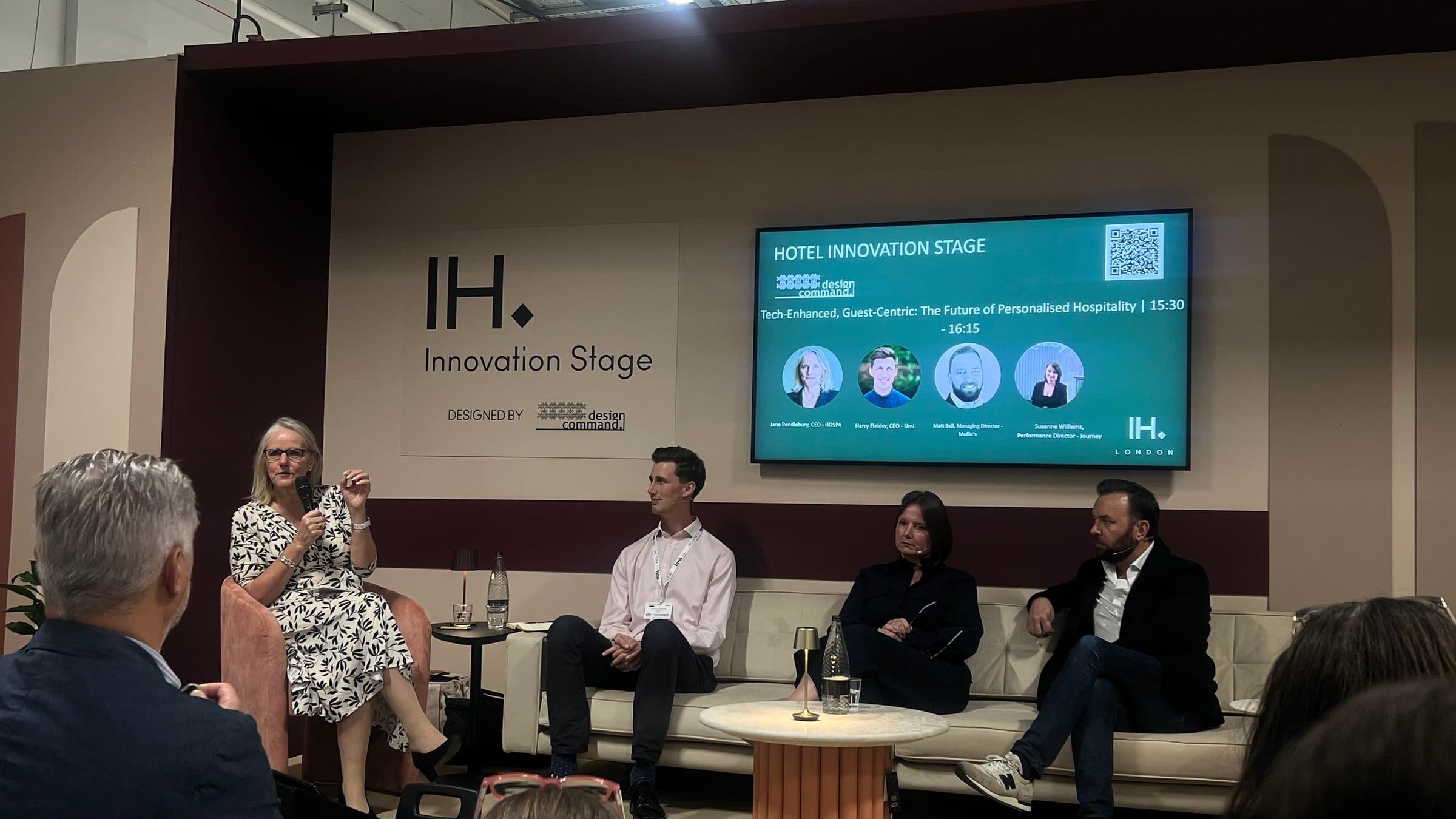
Technology, people, and the future of personalised hospitality
Notes from the Innovation Stage at the Independent Hotel Show, on what personalisation actually asks of a hospitality team — and where the technology stops and the people start.
08 Oct 2025 · 7 min read