
Buy and build is the realistic future of hospitality technology
Building everything is slow and expensive. Buying everything means accepting a guest journey shaped by someone else’s roadmap. The advantage sits in the final layer.

There are two well-worn positions on hospitality technology, and both of them are wrong most of the time.
The first says build it. Own the stack, control the experience, differentiate. In practice it produces expensive systems that do worse what a specialist vendor already does well, and a maintenance burden the business did not budget for.
The second says buy it. Pick the best-in-class platform for each function and integrate. In practice it produces a guest journey defined by the intersection of five vendors’ roadmaps, and a business that cannot do the one thing that would actually distinguish it.
The layer that matters
The realistic answer is buy and build. Buy the strong core platforms. Choose open ones. Back vendors with good roadmaps and genuine connectivity. Then build the final layer — the part that creates the advantage.
That final layer is small and specific. It might be:
- An integration between two systems that were never designed to work elegantly together
- A membership or loyalty mechanism that draws live rates from the PMS
- A reporting model that reflects how this business actually thinks about revenue
- A content or campaign workflow that removes a recurring manual step
- A guest journey that spans systems the vendors each only see half of
- An internal tool that gives the commercial team an answer they currently wait a week for
None of those are platforms. All of them are the difference between a stack that works and a stack that wins.
Choosing what to buy
If you are going to build the last layer, the buying criteria change. Feature comparison matters less than it looks. What matters is:
- Openness. Is there a real API, documented, with the data you need, or a partner programme and a sales call?
- Data access. Can you get your own data out at the grain you need it, on a schedule you control?
- Roadmap direction. Is the vendor building towards connectivity, or towards a walled garden?
- Exit cost. What does it take to leave in four years? If the answer is unthinkable, that is a price, not a feature.
A slightly weaker platform that is genuinely open will usually beat a stronger one that is closed, because the open one lets you build the difference and the closed one does not.
Where this leaves the operator
Buy-and-build asks something of the business that pure buying does not: a point of view about what its own advantage actually is. That is the hard part, and it is not a technology question.
But it is the honest position. Hospitality businesses should not build everything from scratch — that is slow, expensive and usually unnecessary. They should also not accept a guest journey that is the sum of what their vendors happened to ship. The answer sits between the two, and it is where a specialist partner adds a disproportionate amount of value.
Why hospitality businesses need connected agencies, not channel suppliers
The agency model separates disciplines because it is easier to package and sell them that way. Hospitality does not work like that, and the gaps between the packages are where performance goes.
18 Aug 2026 · 7 min read
The hidden cost of disconnected hotel technology
Every department chose a good system. The guest experiences the result, and the cost of the gaps between them never appears on anyone’s budget.
19 May 2026 · 6 min read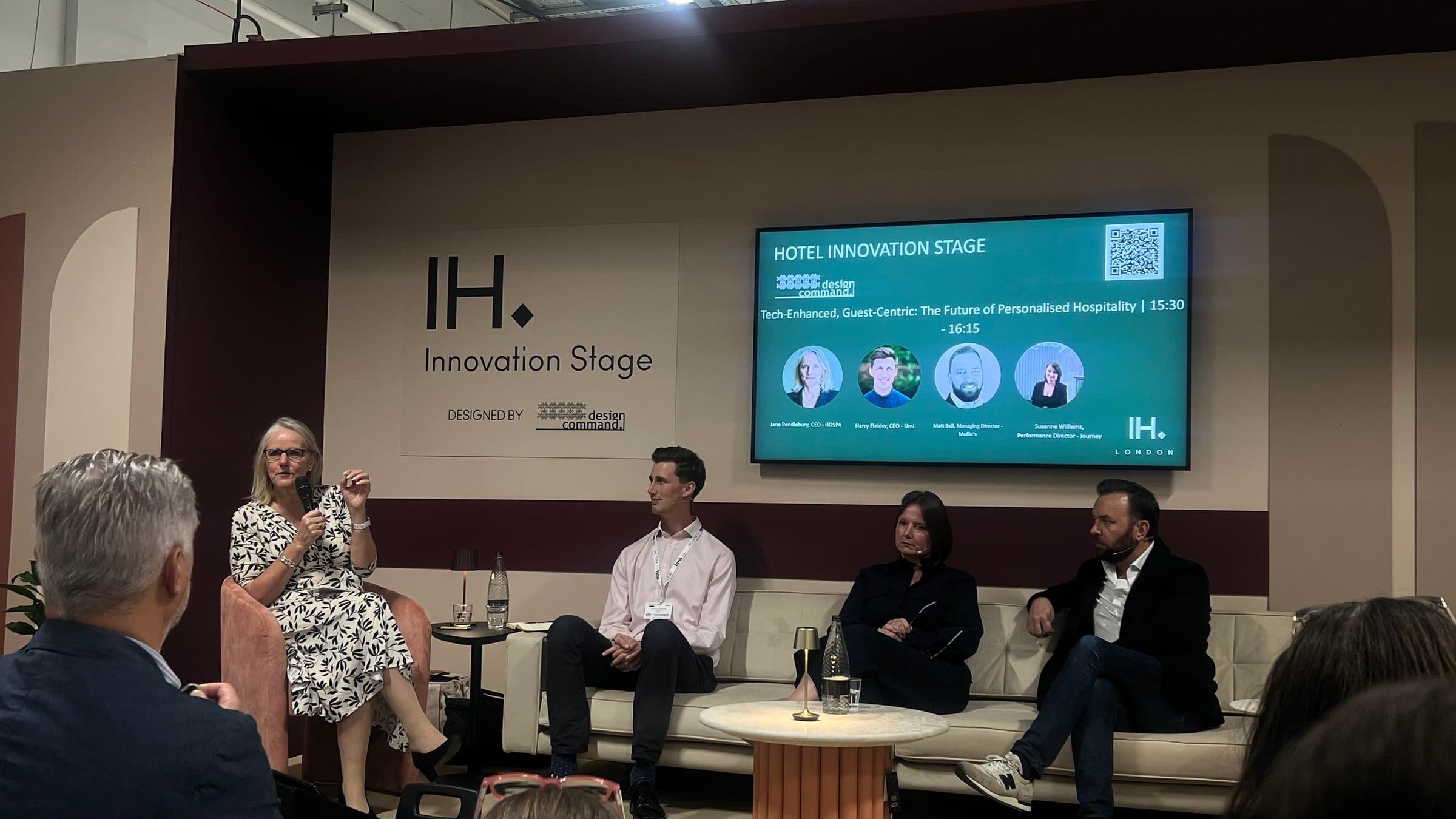
Technology, people, and the future of personalised hospitality
Notes from the Innovation Stage at the Independent Hotel Show, on what personalisation actually asks of a hospitality team — and where the technology stops and the people start.
08 Oct 2025 · 7 min read